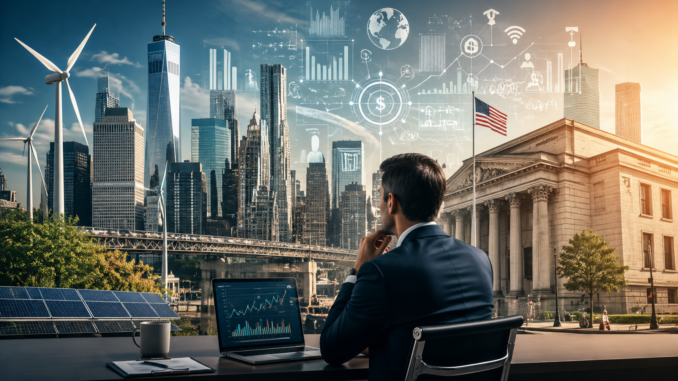
Top US Finance & Economy Trends Shaping America in 2026
The United States economy continues to evolve rapidly in 2026 as businesses, consumers, and investors adapt to changing financial conditions. From artificial intelligence and digital banking to inflation control and renewable energy investments, America’s financial landscape is entering a new era. These economic trends are influencing job markets, consumer spending, housing prices, investment opportunities, and the overall direction of the country’s growth.
Understanding the top US finance and economy trends in 2026 is essential for investors, entrepreneurs, policymakers, and everyday consumers. The economy is no longer shaped by a single factor. Instead, technology, global trade, government policy, and consumer behavior are all working together to redefine financial systems across the nation.
In this article, we explore the most important finance and economic trends shaping America in 2026 and what they mean for the future.
1. Artificial Intelligence Is Transforming the Financial Industry
Artificial intelligence has become one of the biggest drivers of economic change in the United States. Financial institutions are using AI-powered systems to automate customer service, detect fraud, analyze market data, and improve decision-making processes.
Banks and investment firms are investing billions into AI technologies to increase efficiency and reduce costs. Automated financial advisors, also known as robo-advisors, are helping consumers manage investments with lower fees. AI tools are also improving credit scoring systems, making lending decisions faster and more accurate.
At the same time, AI is reshaping the job market. While some traditional roles are disappearing, new technology-focused positions are being created in software development, cybersecurity, and data analysis. Companies that adapt quickly to AI innovations are expected to remain competitive in the evolving economy.
2. Inflation and Interest Rates Continue to Influence Consumer Spending
Inflation remains one of the most closely watched economic indicators in 2026. Although inflation rates have stabilized compared to previous years, prices for housing, healthcare, and groceries are still higher than many Americans would prefer.
The Federal Reserve continues to manage inflation through interest rate policies. Higher interest rates affect mortgages, car loans, and business borrowing costs. As a result, consumers are becoming more cautious about spending, while businesses are reevaluating expansion plans.
Savings accounts and fixed-income investments are becoming more attractive because of better interest returns. However, high borrowing costs are creating challenges for first-time homebuyers and small business owners.
Consumer spending remains a major driver of the US economy, but Americans are increasingly prioritizing essential purchases and reducing discretionary spending. This shift is changing retail strategies and influencing overall economic growth.
3. The Housing Market Is Adjusting to New Economic Realities
The US housing market is experiencing significant adjustments in 2026. Rising mortgage rates and high property prices have slowed home sales in several regions. Many buyers are delaying purchases, while sellers are becoming more flexible with pricing.
Affordable housing shortages continue to impact major cities across America. Rental demand remains strong, especially in urban areas where homeownership is less accessible. Real estate developers are focusing more on multi-family housing projects and suburban communities.
Remote work trends are also changing housing preferences. Many Americans are moving away from expensive metropolitan areas in search of affordable living and better work-life balance. Smaller cities and suburban regions are benefiting from increased migration and investment.
Despite market slowdowns, real estate continues to be considered a long-term investment opportunity. Investors are closely monitoring interest rates, population shifts, and housing supply trends before making major decisions.
4. Renewable Energy Investments Are Expanding Rapidly
Clean energy and sustainability have become major priorities for both businesses and government leaders in the United States. Investments in solar energy, electric vehicles, wind power, and green infrastructure are growing rapidly in 2026.
Government incentives and environmental policies are encouraging companies to adopt cleaner technologies. Large corporations are investing in renewable energy projects to reduce carbon emissions and meet sustainability goals.
The electric vehicle industry continues to expand as more consumers transition away from traditional gasoline-powered cars. Charging infrastructure development is creating new business opportunities and jobs nationwide.
Renewable energy investments are not only helping the environment but also strengthening the economy through innovation and manufacturing growth. The clean energy sector is expected to remain one of the fastest-growing industries in the coming years.
5. Digital Banking and Financial Technology Are Reshaping Consumer Finance
Financial technology, commonly known as fintech, continues to revolutionize banking and personal finance in America. Consumers are increasingly using mobile apps, digital wallets, and online payment systems for everyday transactions.
Traditional banks are facing strong competition from fintech companies offering faster, more convenient financial services. Mobile banking platforms now provide budgeting tools, investment tracking, and instant payment options.
Cryptocurrency and blockchain technology also remain part of the financial conversation in 2026. While digital asset markets remain volatile, blockchain technology is being adopted for secure transactions, supply chain management, and financial recordkeeping.
Cybersecurity has become a critical focus as digital financial activity grows. Financial institutions are investing heavily in data protection and fraud prevention systems to maintain customer trust.
The shift toward digital finance is making banking more accessible while also increasing the importance of financial literacy and online security awareness.
6. The Job Market Is Evolving With Technology and Automation
The American workforce is undergoing major transformation due to automation, artificial intelligence, and changing business models. Technology-related jobs are growing quickly, while repetitive and manual positions are becoming increasingly automated.
Industries such as healthcare, technology, renewable energy, and logistics are creating strong employment opportunities. At the same time, employers are emphasizing skills such as adaptability, digital literacy, and problem-solving.
Remote and hybrid work arrangements remain popular in many industries. Companies are offering flexible work environments to attract and retain skilled employees. This shift has also influenced office space demand and urban economic activity.
Workforce development programs and online education platforms are helping workers gain new skills for emerging industries. Continuous learning is becoming essential in a rapidly changing economy.
Despite economic uncertainty in some sectors, the US labor market remains resilient due to innovation and entrepreneurial growth.
7. Supply Chain Improvements Are Strengthening Business Operations
Supply chain disruptions that affected global markets in previous years have encouraged American companies to rethink production and distribution strategies. Businesses are now focusing on supply chain resilience, efficiency, and domestic manufacturing.
Many companies are diversifying suppliers to reduce dependence on a single region or country. Investments in automation, warehouse technology, and logistics systems are improving delivery speeds and reducing operational risks.
The push for domestic manufacturing is also creating economic opportunities within the United States. Industries such as semiconductors, automotive manufacturing, and pharmaceuticals are receiving increased investment support.
Improved supply chain management is helping businesses control costs and maintain product availability, benefiting both consumers and the broader economy.
8. Small Businesses and Entrepreneurship Are Driving Economic Growth
Small businesses continue to play a major role in the US economy in 2026. Entrepreneurs are launching new ventures in technology, e-commerce, healthcare, and digital services.
Online business models are becoming increasingly popular because of lower startup costs and wider market access. Social media marketing, e-commerce platforms, and digital payment systems are enabling small businesses to compete with larger corporations.
Access to funding remains an important issue for entrepreneurs. While higher interest rates create borrowing challenges, alternative financing options such as crowdfunding and fintech lending platforms are providing additional opportunities.
Government programs supporting innovation and local business development are also contributing to economic growth. Entrepreneurship remains a key source of job creation and economic resilience in America.
9. Consumer Confidence and Financial Literacy Are Becoming More Important
Economic uncertainty has encouraged Americans to become more financially aware and cautious. Consumers are paying closer attention to budgeting, savings, debt management, and investment strategies.
Financial literacy programs are expanding through schools, workplaces, and online platforms. Many Americans are seeking better understanding of retirement planning, stock market investing, and personal finance management.
Younger generations are showing increased interest in investing and wealth-building opportunities. Digital investment apps and educational content are making financial information more accessible than ever before.
Consumer confidence remains closely tied to inflation, employment rates, and economic stability. Strong financial education can help individuals make informed decisions during uncertain economic conditions.
Conclusion
The US finance and economy landscape in 2026 is being shaped by innovation, technological advancement, and changing consumer behavior. Artificial intelligence, digital banking, renewable energy, housing market adjustments, and workforce transformation are influencing every part of the economy.
While challenges such as inflation and high interest rates continue to impact consumers and businesses, new opportunities are emerging across multiple industries. Companies that embrace innovation and adaptability are likely to succeed in the evolving economic environment.
For investors, entrepreneurs, and everyday Americans, understanding these economic trends is essential for making informed financial decisions. As the United States moves forward, the balance between technology, sustainability, and economic stability will continue to define the future of America’s financial system.